


100 Years.
5,200 Issues.
More than 100,000 pages.
Countless articles have arrived in our mailboxes for 10 decades, delivering breaking news about Israel and the Jewish diaspora, globally, nationally, and here in Memphis, because every week The Hebrew Watchman shows up for us.
For 100 years, The Hebrew Watchman has shared our stories. Joyous coverage of the founding and flourishing of Israel, as well as heartbreaking reporting on tragedy here and abroad. Global Jewish excellence in the arts, science, politics and culture abound in these pages. So does the eternal shadow of antisemitism.
But The Watchman’s coverage of our Memphis Jewish community is its magic, connecting us to our past, present and future, and to each other. Stories about our families, the businesses and organizations that make Jewish Memphis special, and the people whose hard work drives it. These thousands of pages shared our great-grandparents’, our grandparents’, and our parent’s obituaries, may their memories be blessings. Someday they will share our own. They also share our simchas – our children’s births and b’nai mitzvah announcements, our graduations, our marriages. May we do so for generations to come.
Every week, The Watchman shows up for us, as it has for 100 years. We may go to different synagogues, learn with different rabbis, swim in different lanes at the MJCC. We may have different secret recipes replicating Bubbe’s noodle kugel and matzoh ball soup. We support tzedakah in our community differently and participate in tikkun olam through whatever organizations touch our hearts. And we all sit down and read the paper. Because The Hebrew Watchman shows up for us, every week.
Jewish newspapers once seemed as abundant as synagogues, with daily, weekly, and monthly publications of all shapes and sizes rolling out of print shops from Southern California to New England, and all significant pockets of Jewish culture in between.
During the wild independent heyday of the mid-century, the depth of coverage of the North American diaspora was dizzying. The Iowa Jewish News, for example, was a Shabbat tradition, rolling off the press in Des Moines every Friday for a modest 20 years, from 1932 to 1952. At its peak, it reached hardly more than 1,800 households with the latest news for Jews. 1,100 miles to the east, New York City’s Jewish Bakers’ Voice was published weekly by the Local 338 of the International Bagel Bakers Union, distributing just short of 1,500 copies as recently as 1952. Talk about niche publications.
Today a handful of storied publications remain, in cities like Chicago, Detroit, Cleveland, Atlanta, Denver. Many, like the St. Louis Jewish Light, are run as nonprofits, often by the community’s Jewish Federation or with close association to a shul or school. Unsurprisingly, the greater New York City metro area still boasts dozens of periodicals, all serving distinct portions of the region’s huge Jewish population.
Here in Memphis, we have The Hebrew Watchman. Since its first issue, this community has unfailingly been blessed with a fresh issue weekly, without a single pause or interruption.
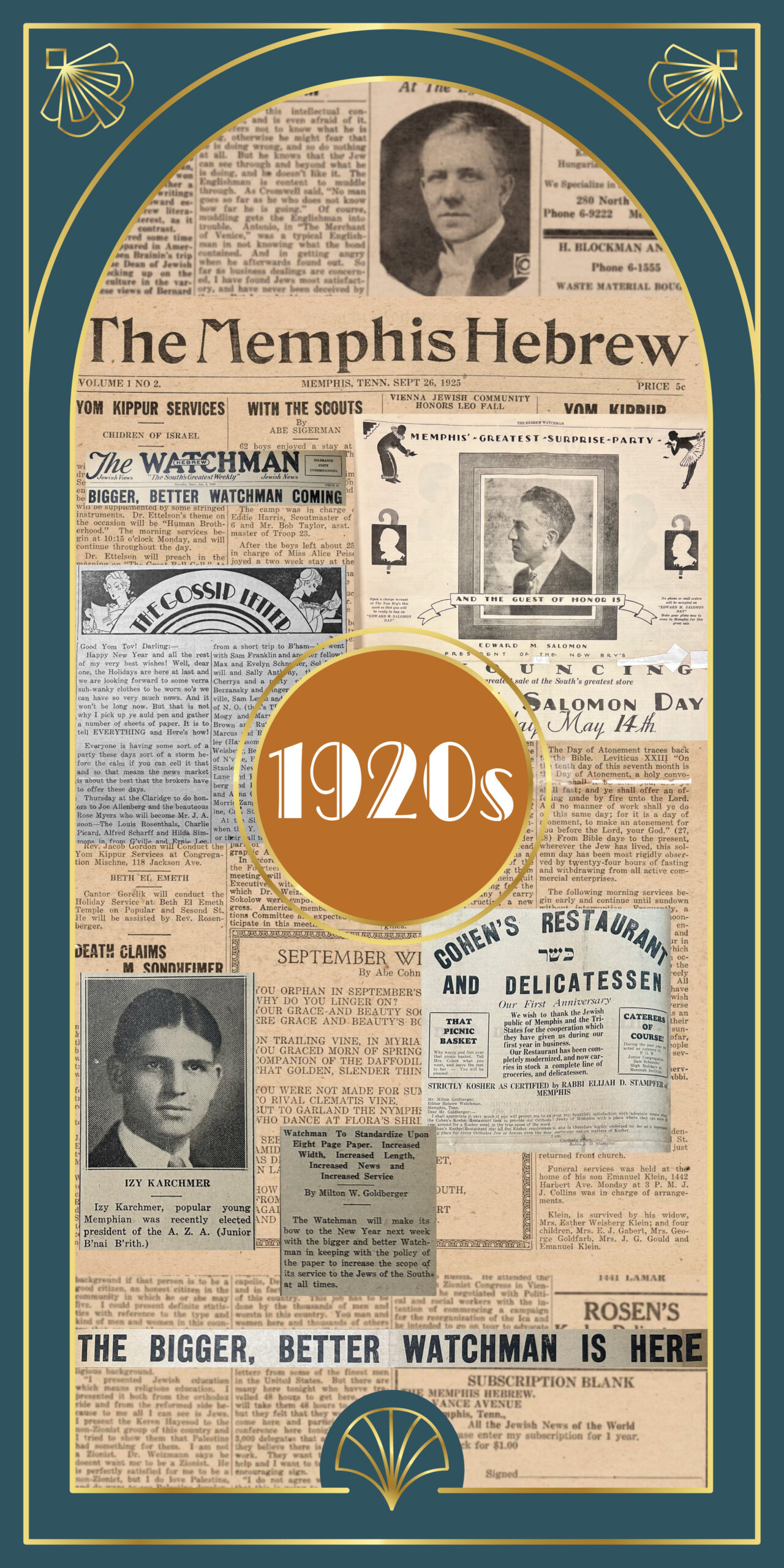
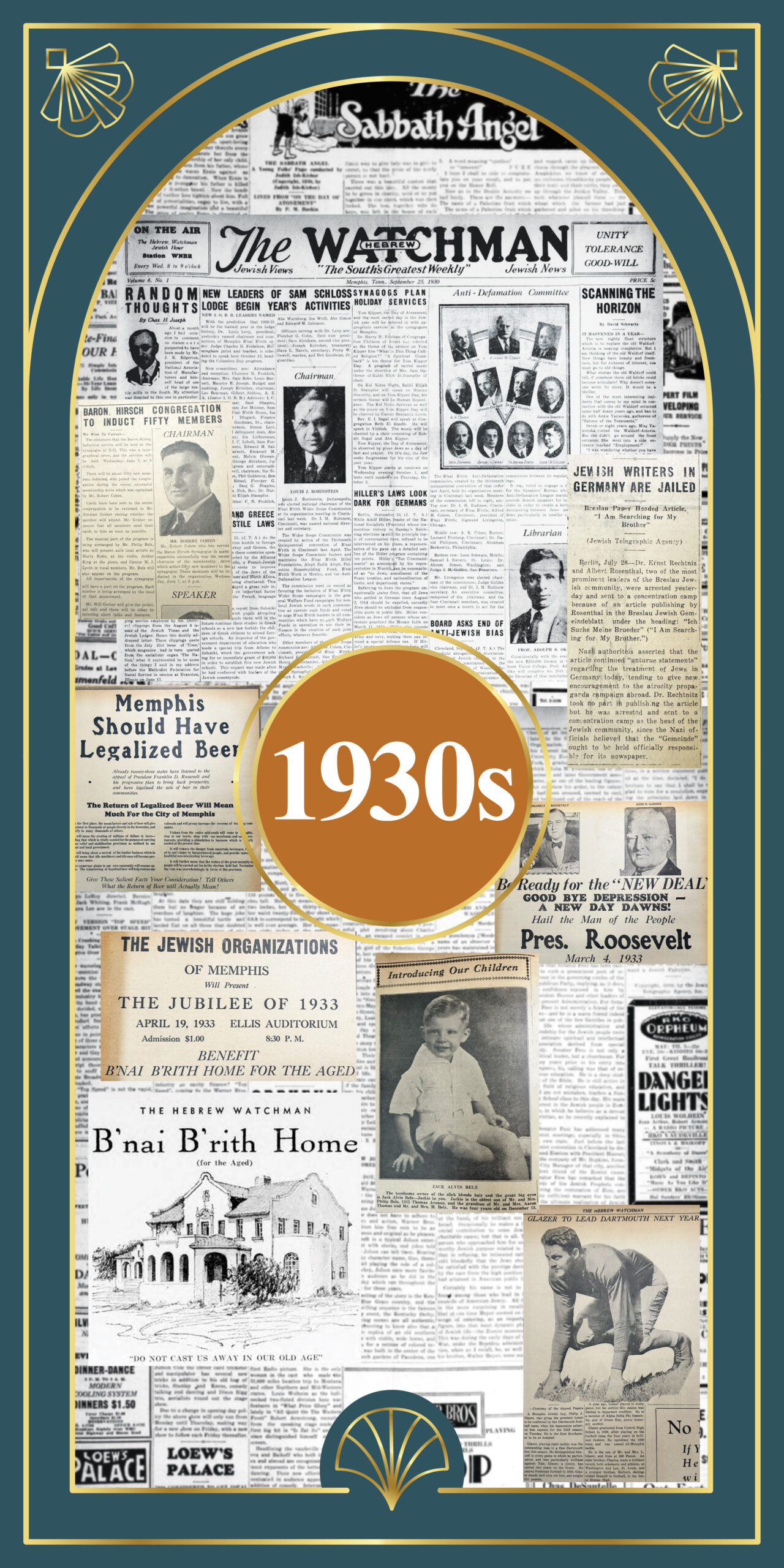
During the past six months, we have researched and unearthed 100 years of Jewish Memphis buried within the pages of The Hebrew Watchman. The archives, a time capsule of our shared history among Jews around the world.
The Hebrew Watchman has always been a family-owned and -run business.
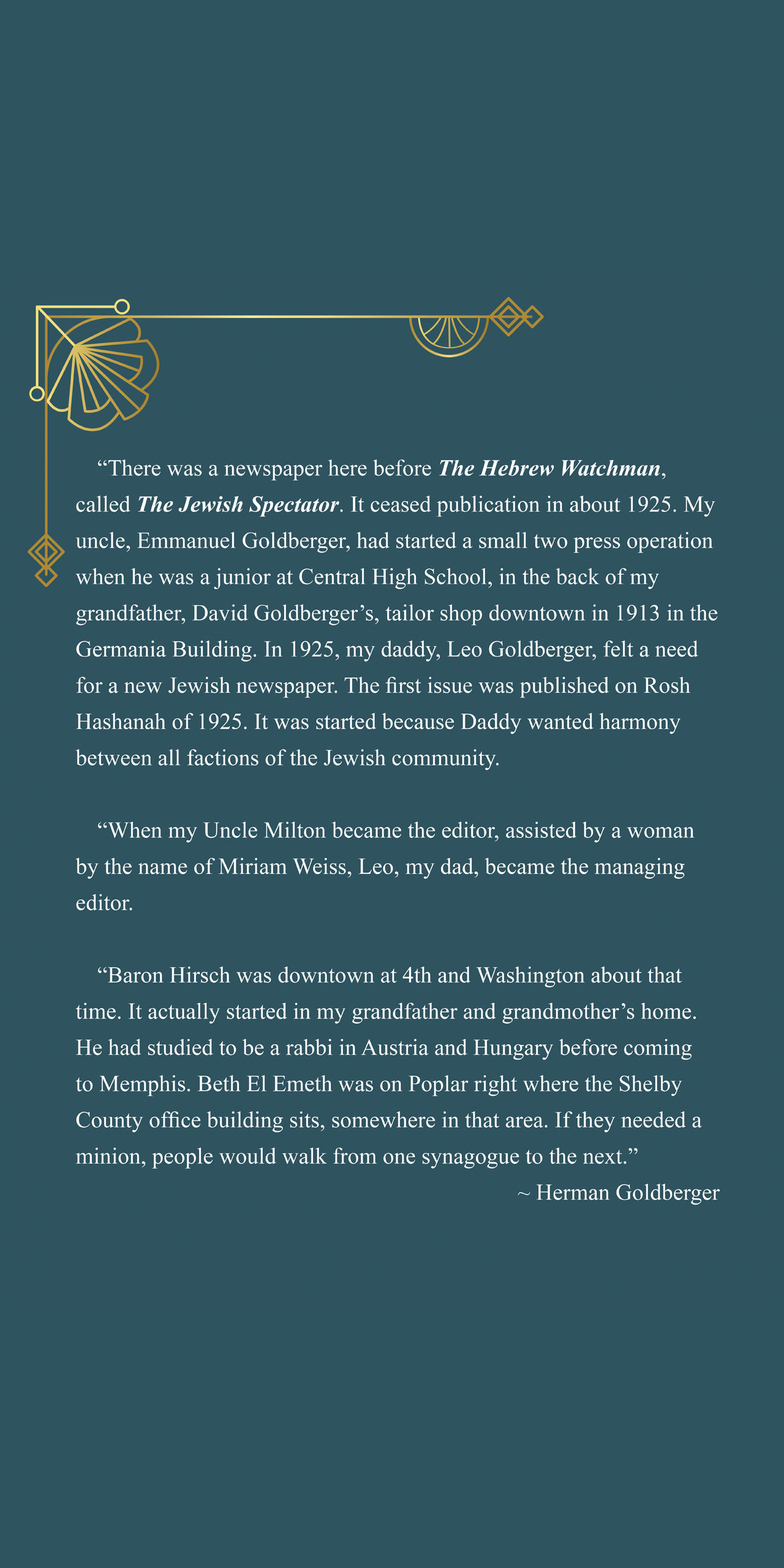
It all began in 1925 when Leo Goldberger along with an older brother, Sam, were left in charge of the family printing business while their brother, Emanuel, went off to join the Marines. Leo decided to start a weekly Jewish newspaper, The Watchman, which was eventually renamed The Hebrew Watchman.
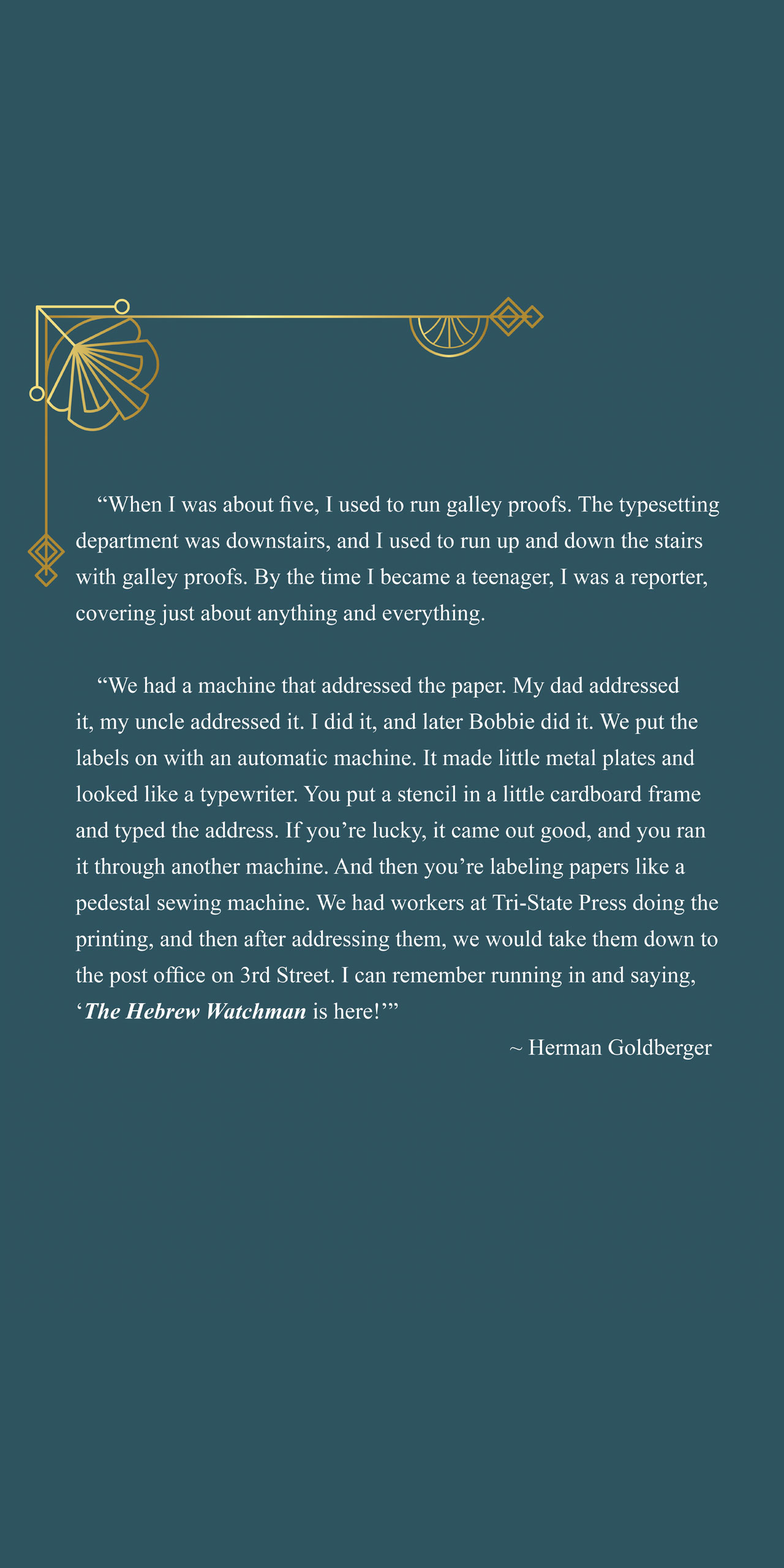
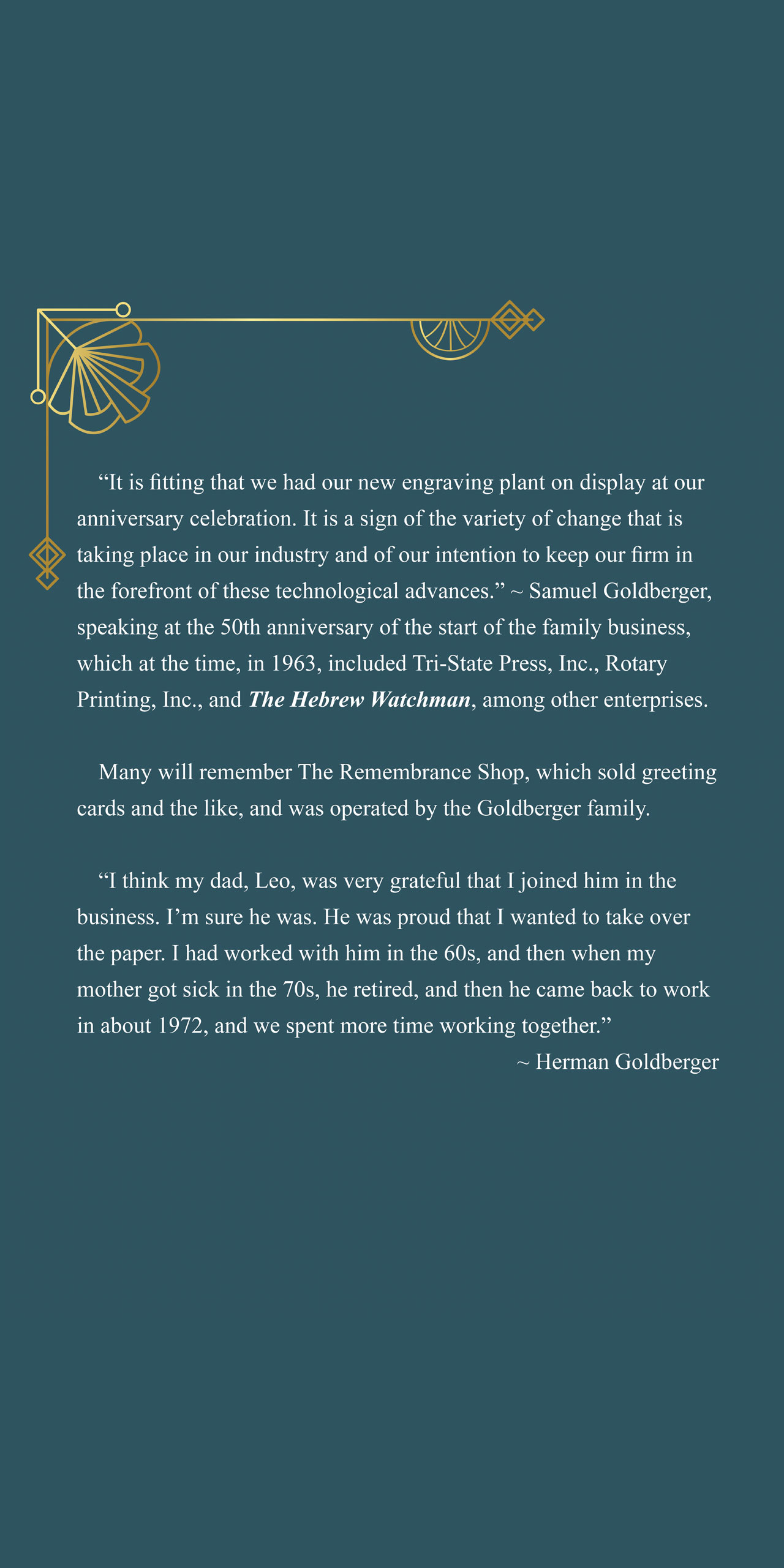
Throughout the decades many family members have contributed in numerous ways. Milton Goldberger returned from college with a journalism degree and took editorship of The Hebrew Watchman while Leo became the business manager. Their sister, Alwena (Ollie) Friedman, sold advertising. Her daughter, Florence, wrote a column for high school- and college-age readers focusing on social gossip, called Private Correspondence. Leo’s wife, Gertrude (Scheinberg), sold subscriptions. Their daughter, Dotty Katz, wrote a kosher cooking series, with recipes that were later printed in a cookbook. Leo’s daughter, Shirley Roberts, was the paper’s secretary for a brief period while in high school. Herman, the youngest of Leo’s children, started “working” at the paper at 5 years old and never left. When his father retired, Herman became editor and publisher adding his wife, Barbara (Bobbie) Buring Goldberger, to the roster as associate editor after their marriage in 1964. Even Bobbie’s mother, Hattie Ruth Buring, worked on the paper as well Leo’s granddaughter, Lynnie Mirvis, who also wrote the “gossip” column from 1962-65.
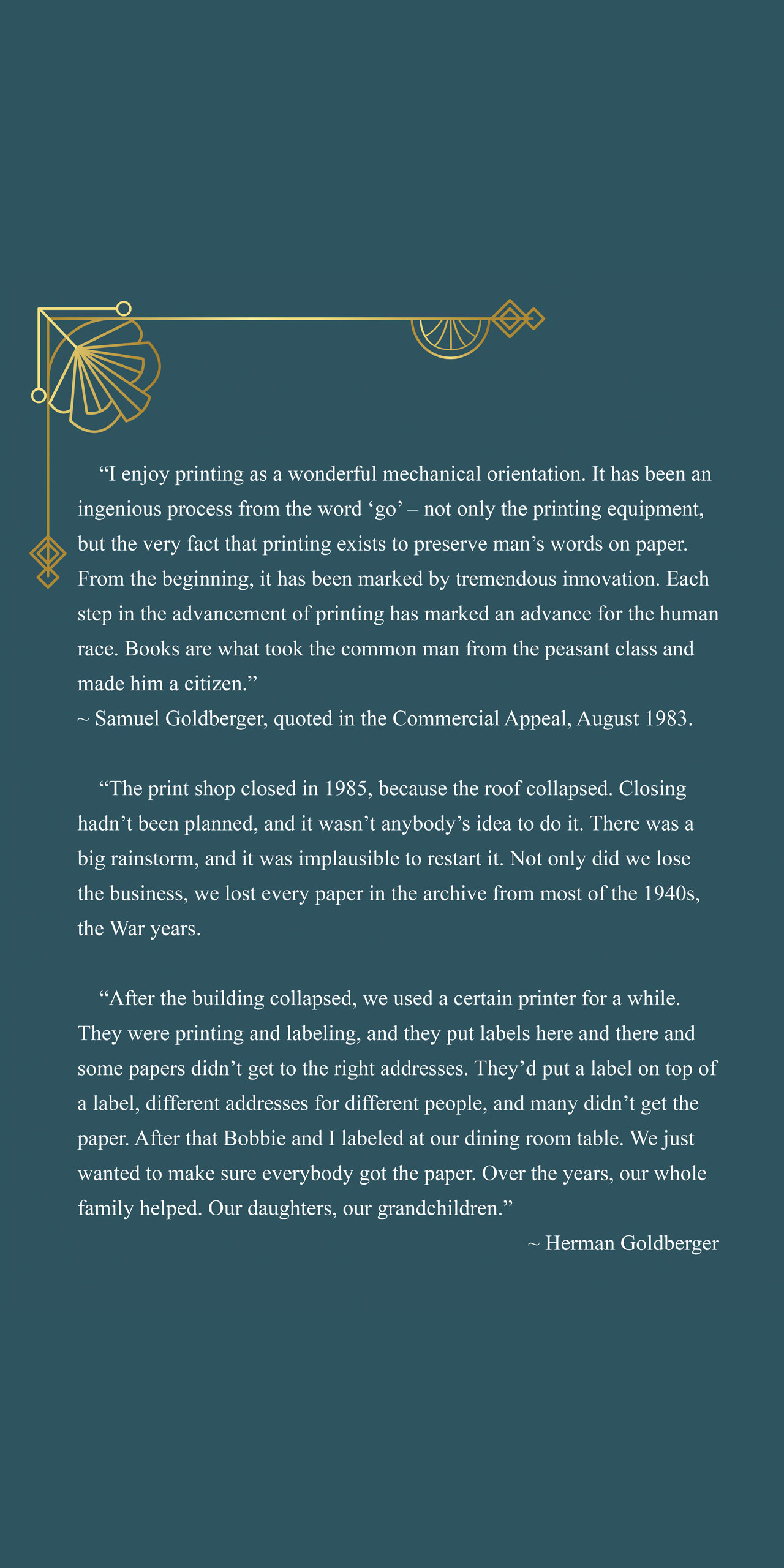
For 50 years, Herman and Bobbie worked together getting the paper to print and in mailboxes each week. As the years flew by, their daughters, Bonnie Kwatnez and Jodie Faber, and her husband, Henry, helped where they could – labeling, schlepping the paper to the downtown post office. Even the grandkids learned to label.
In 2021 with heavy hearts, the Goldbergers decided it was time to retire. After searching for an appropriate transition, they found an eager buyer. Memphian Susan Nieman, publisher and editor of Jewish Scene Magazine, worked with the Goldbergers to preserve the name and heritage of the cherished family business, which was celebrating 95 years at the time.
Here, we celebrate its enduring legacy.
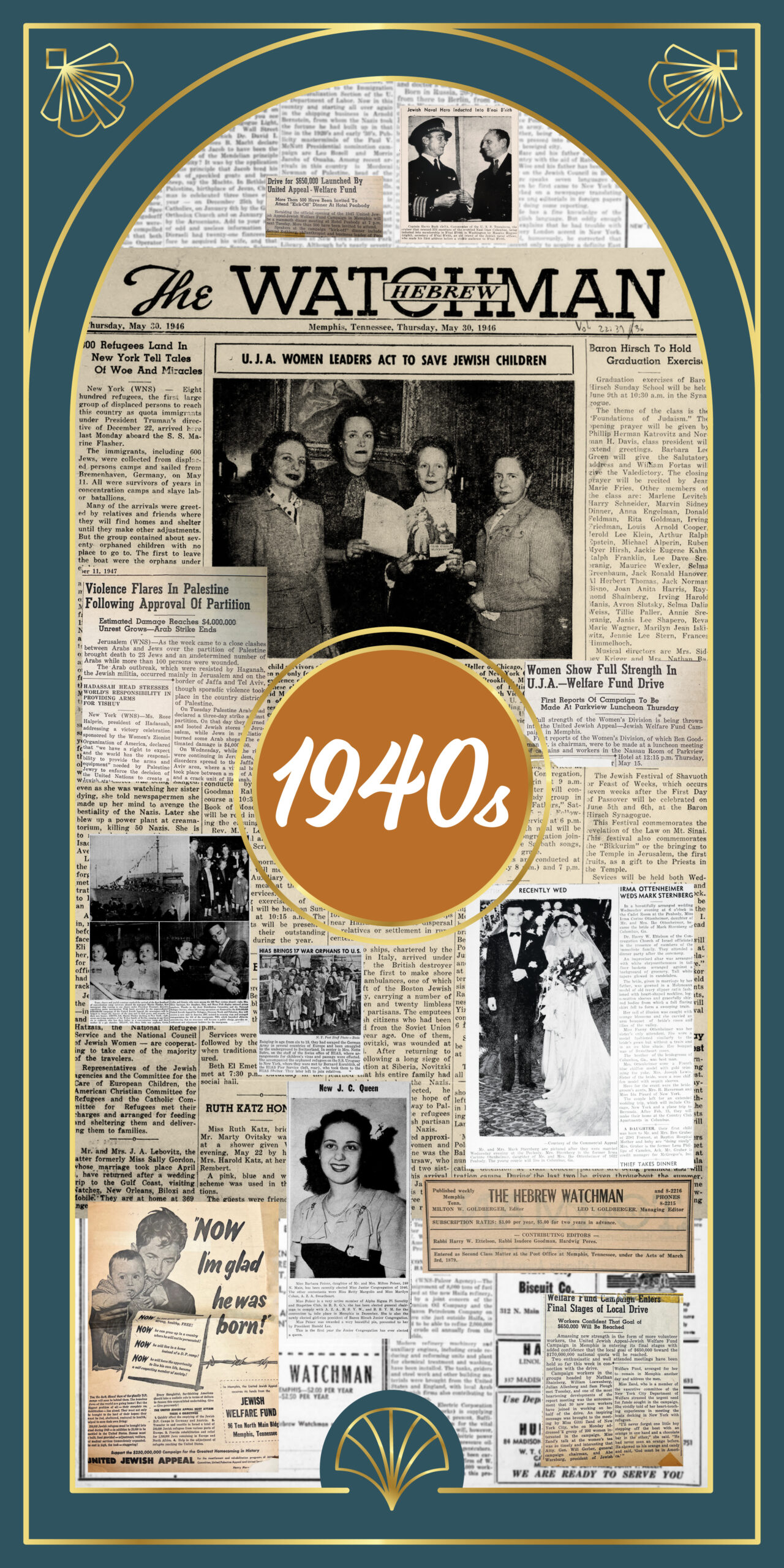
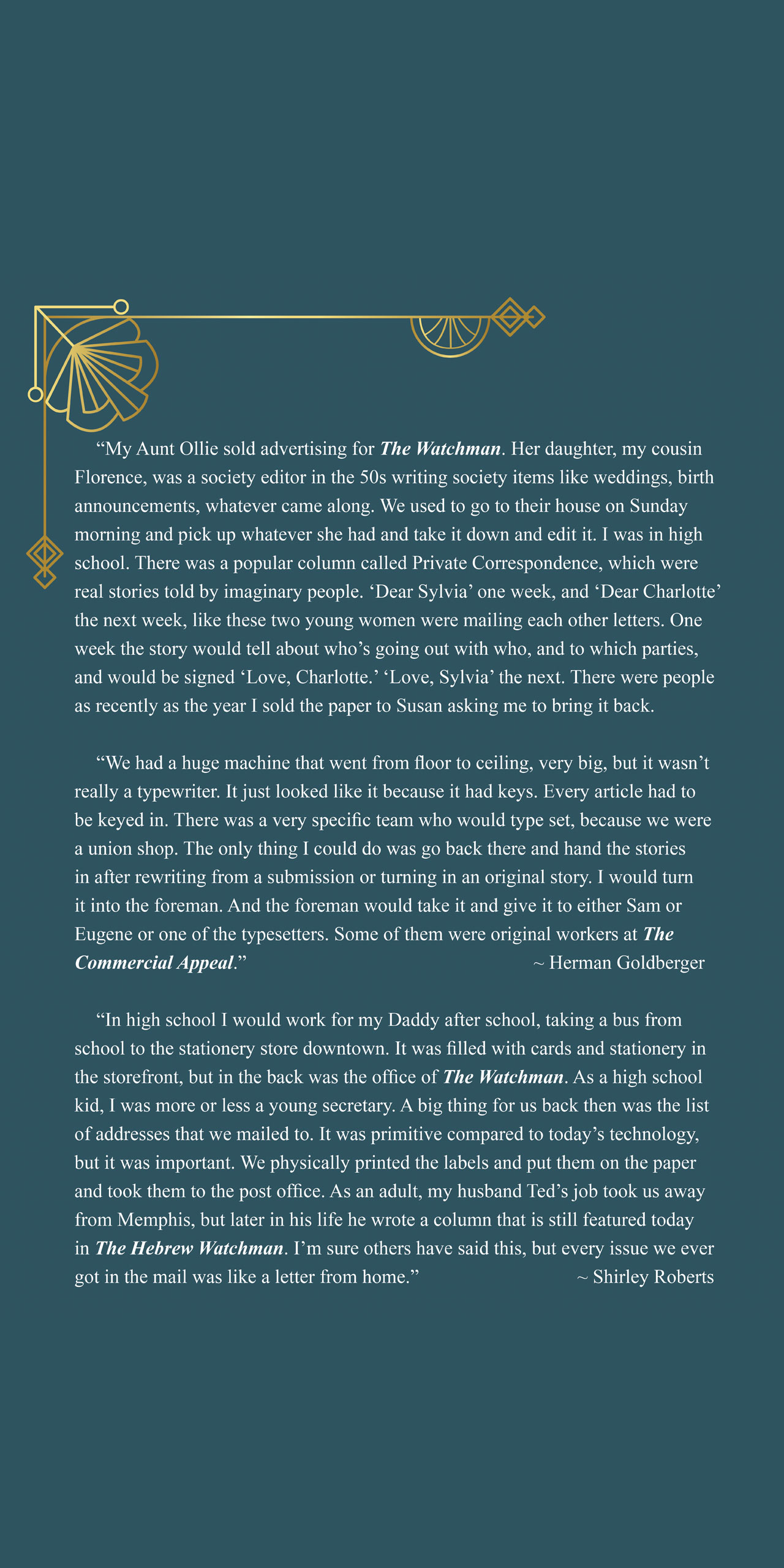
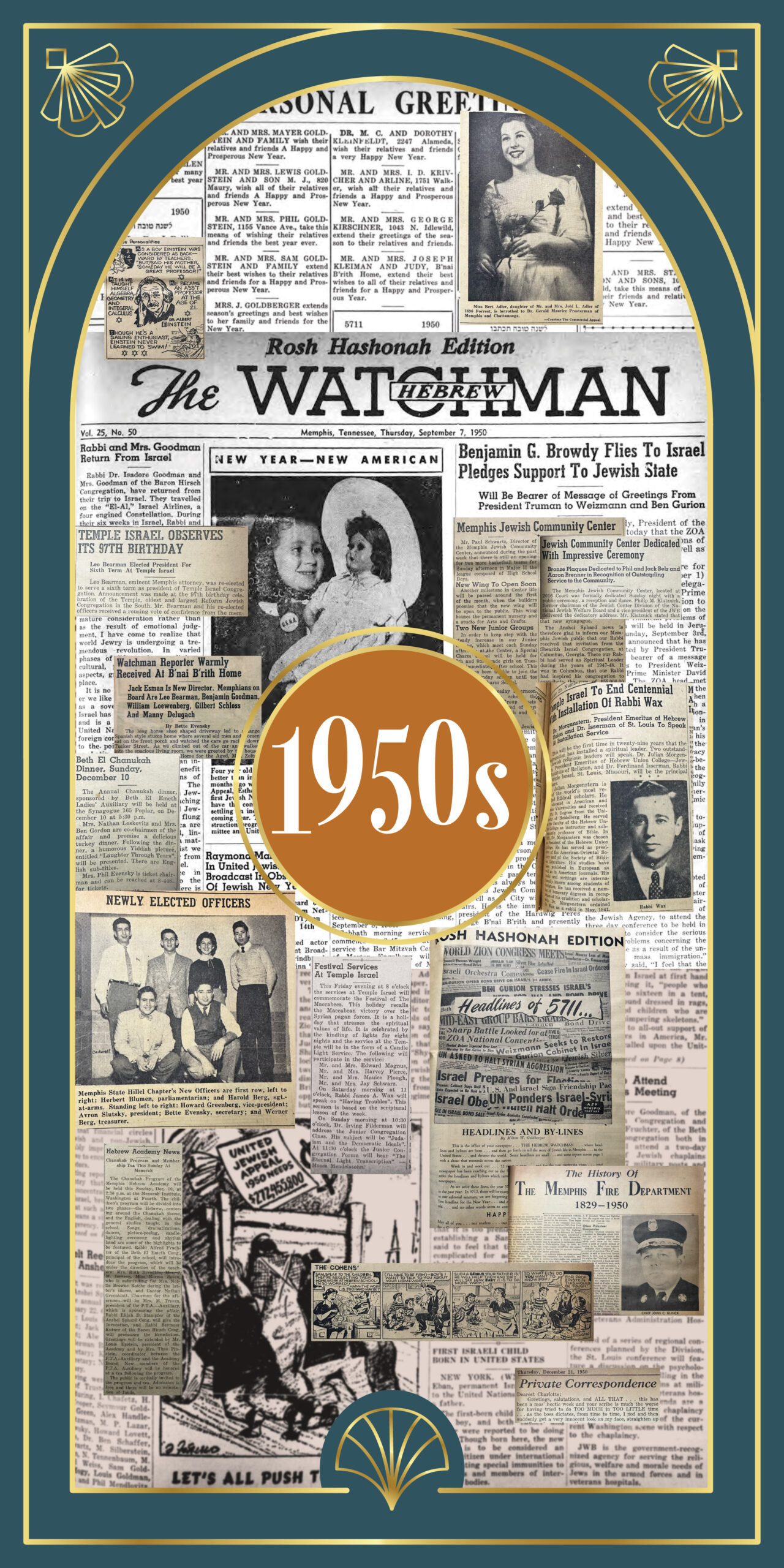
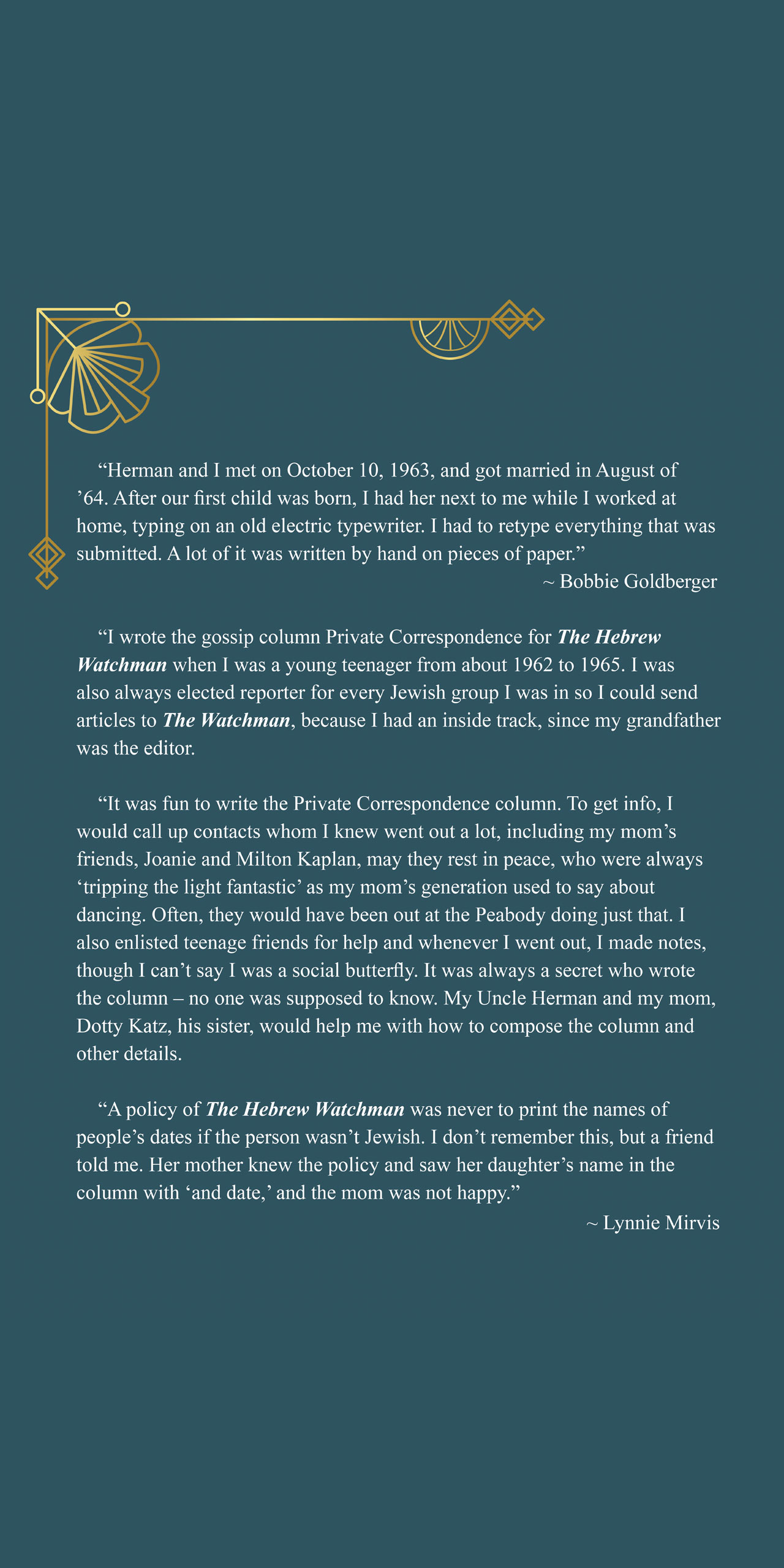
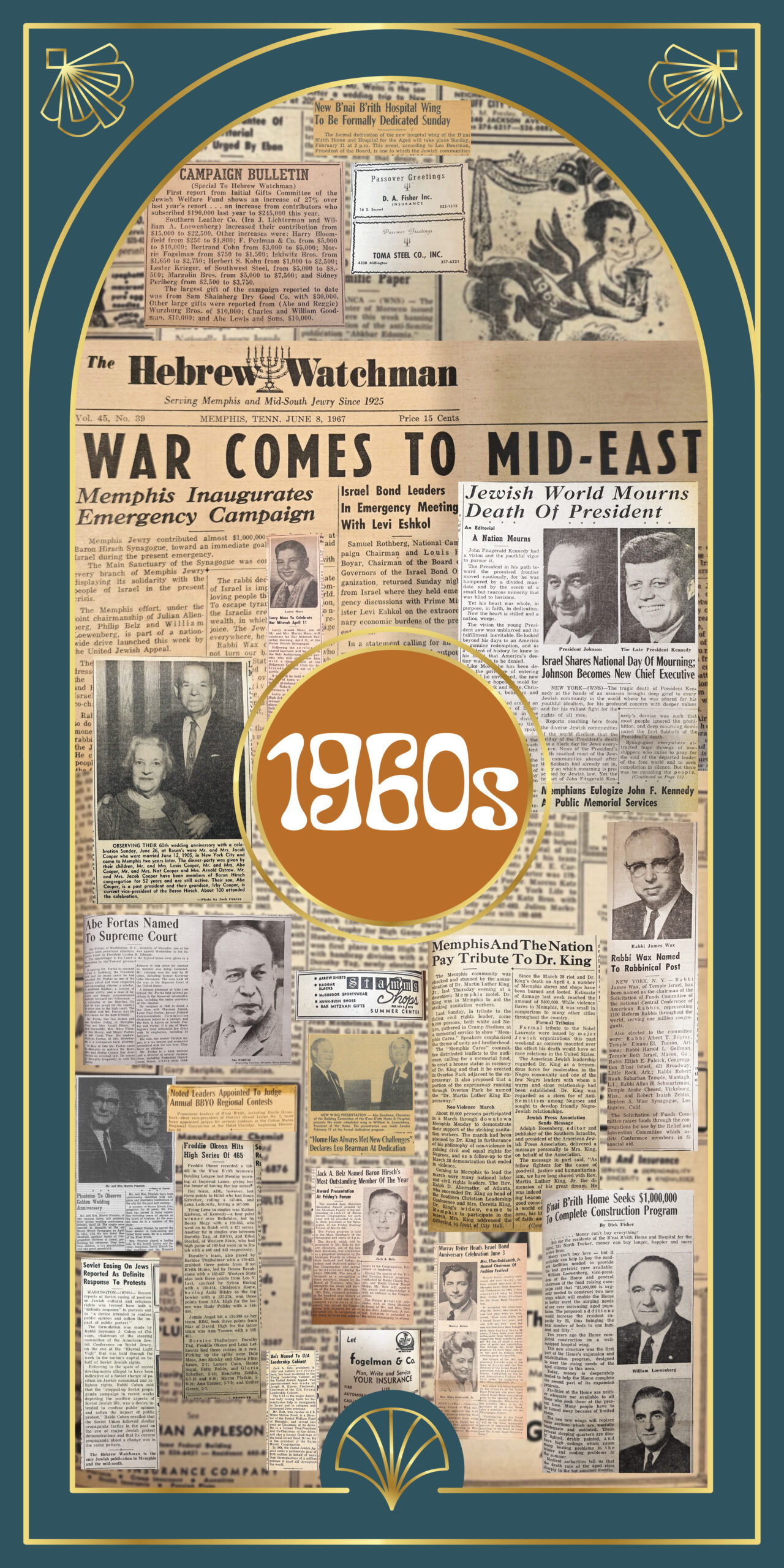
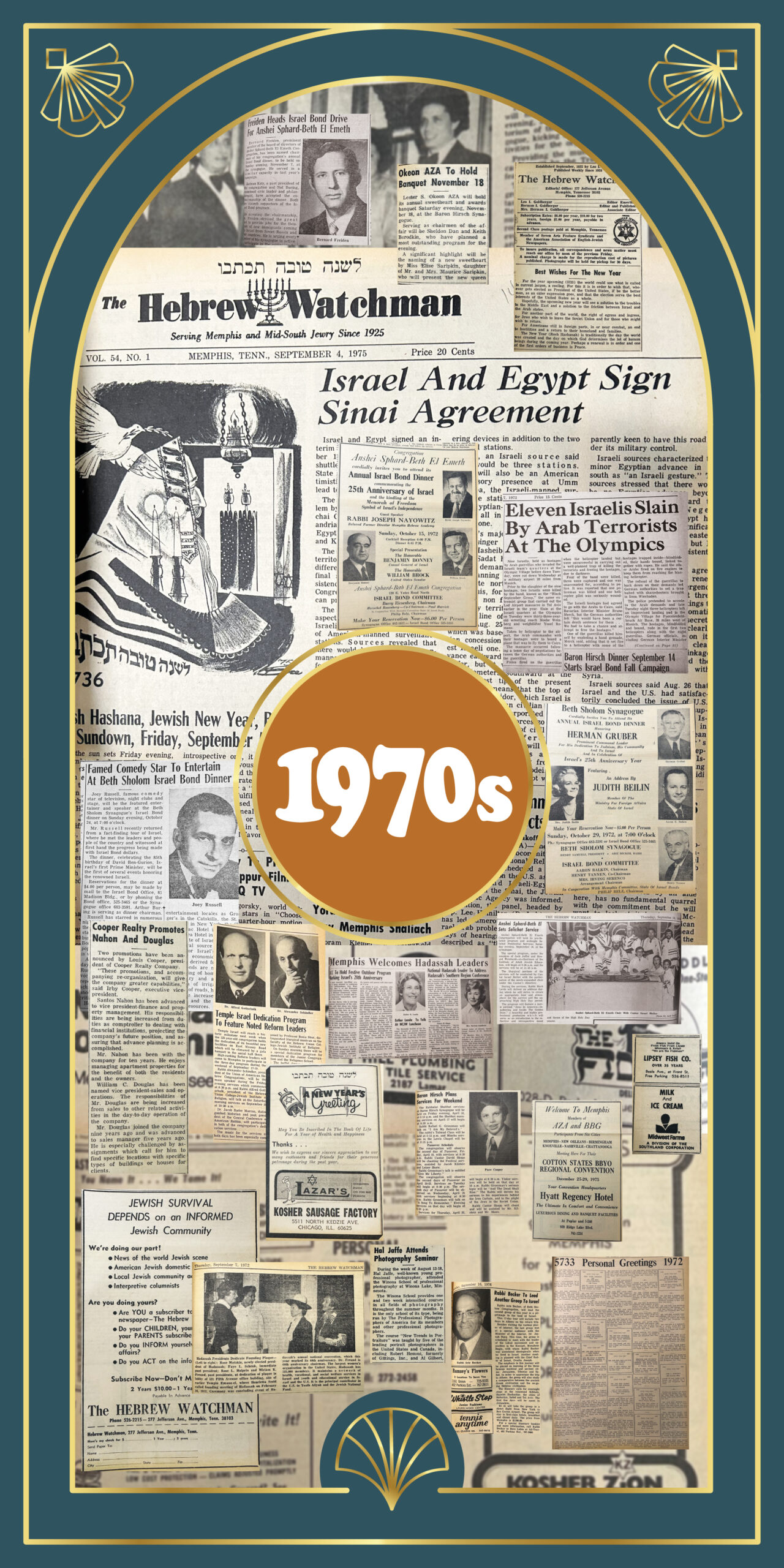
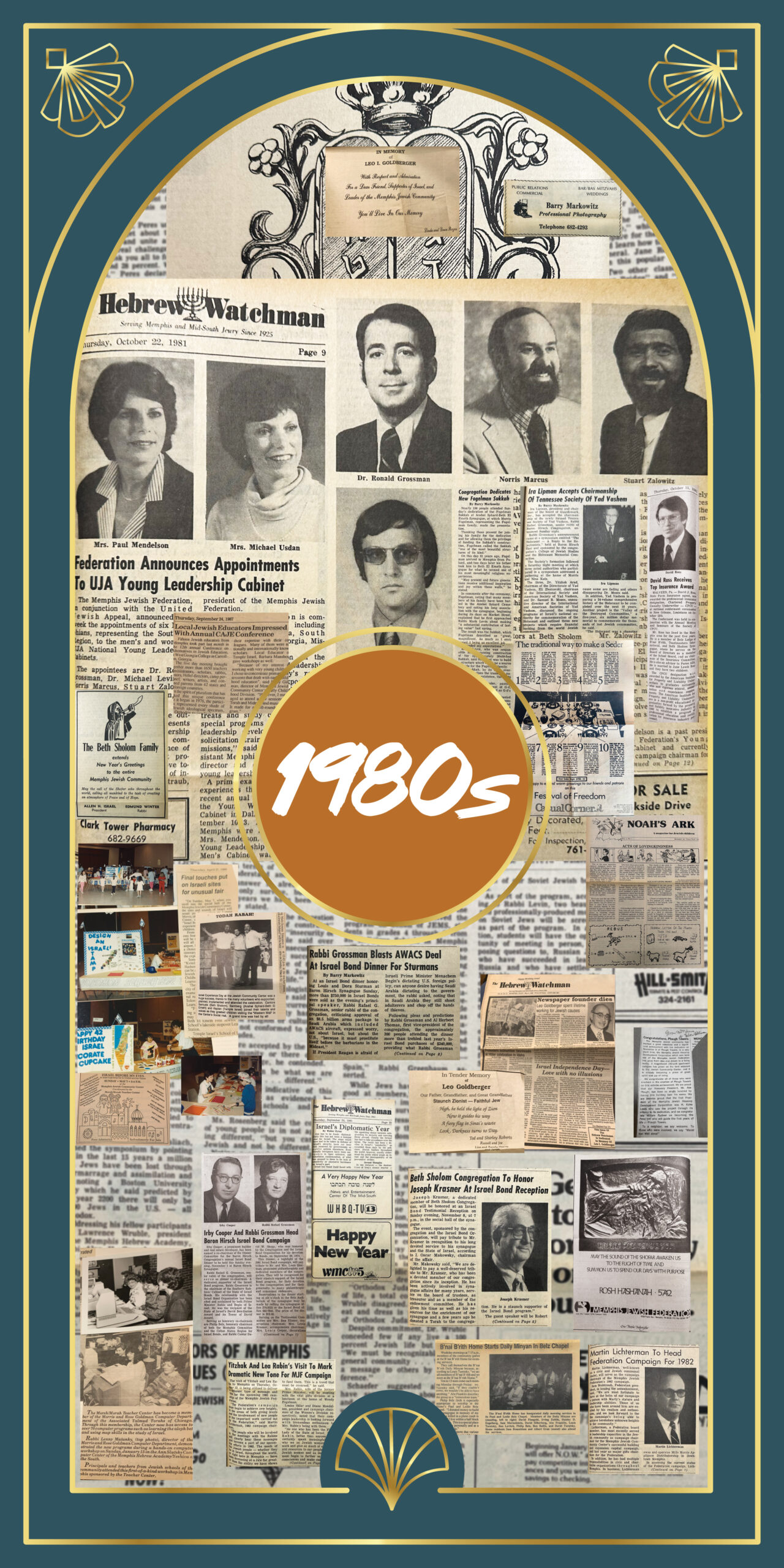
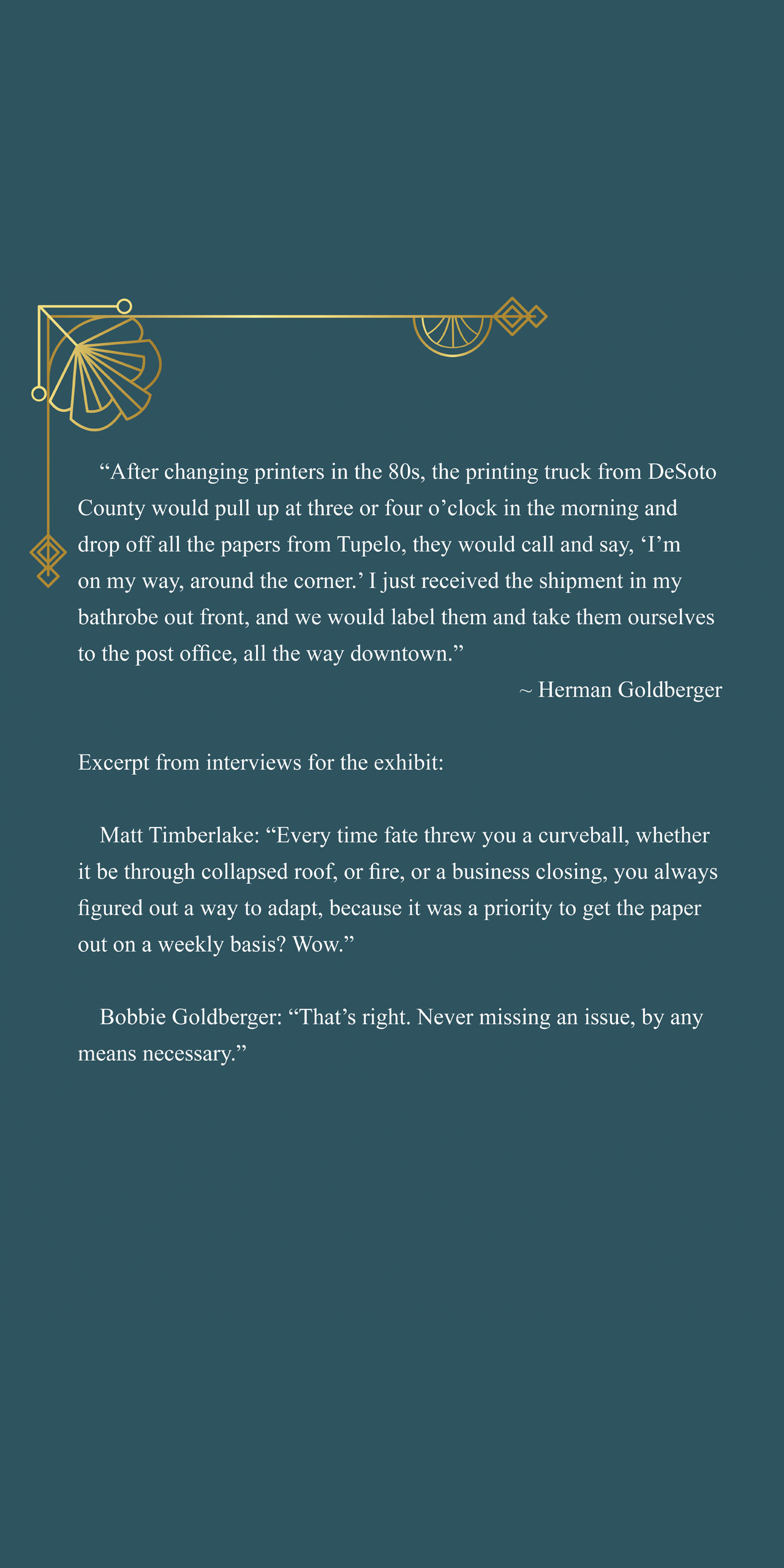
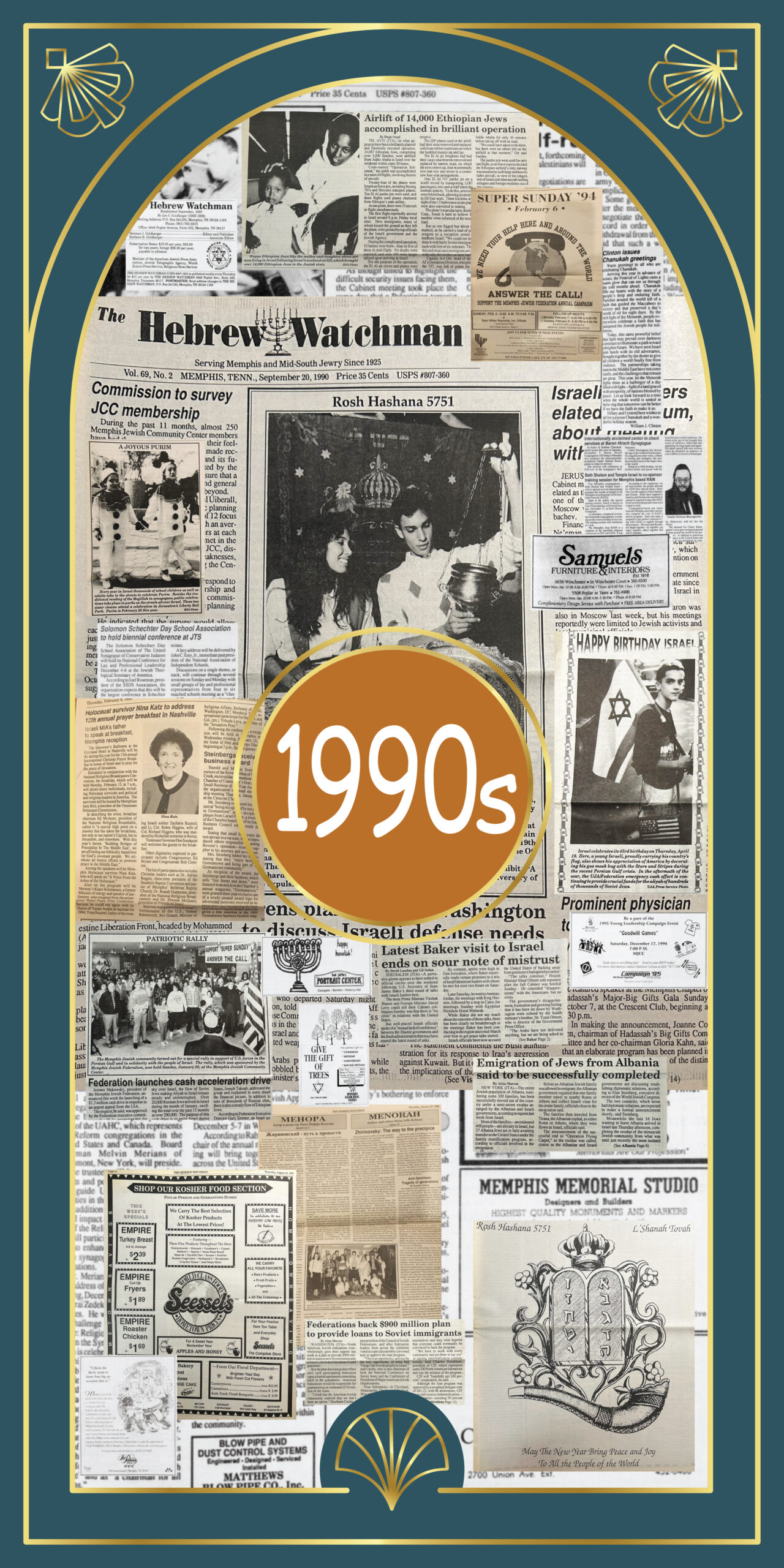
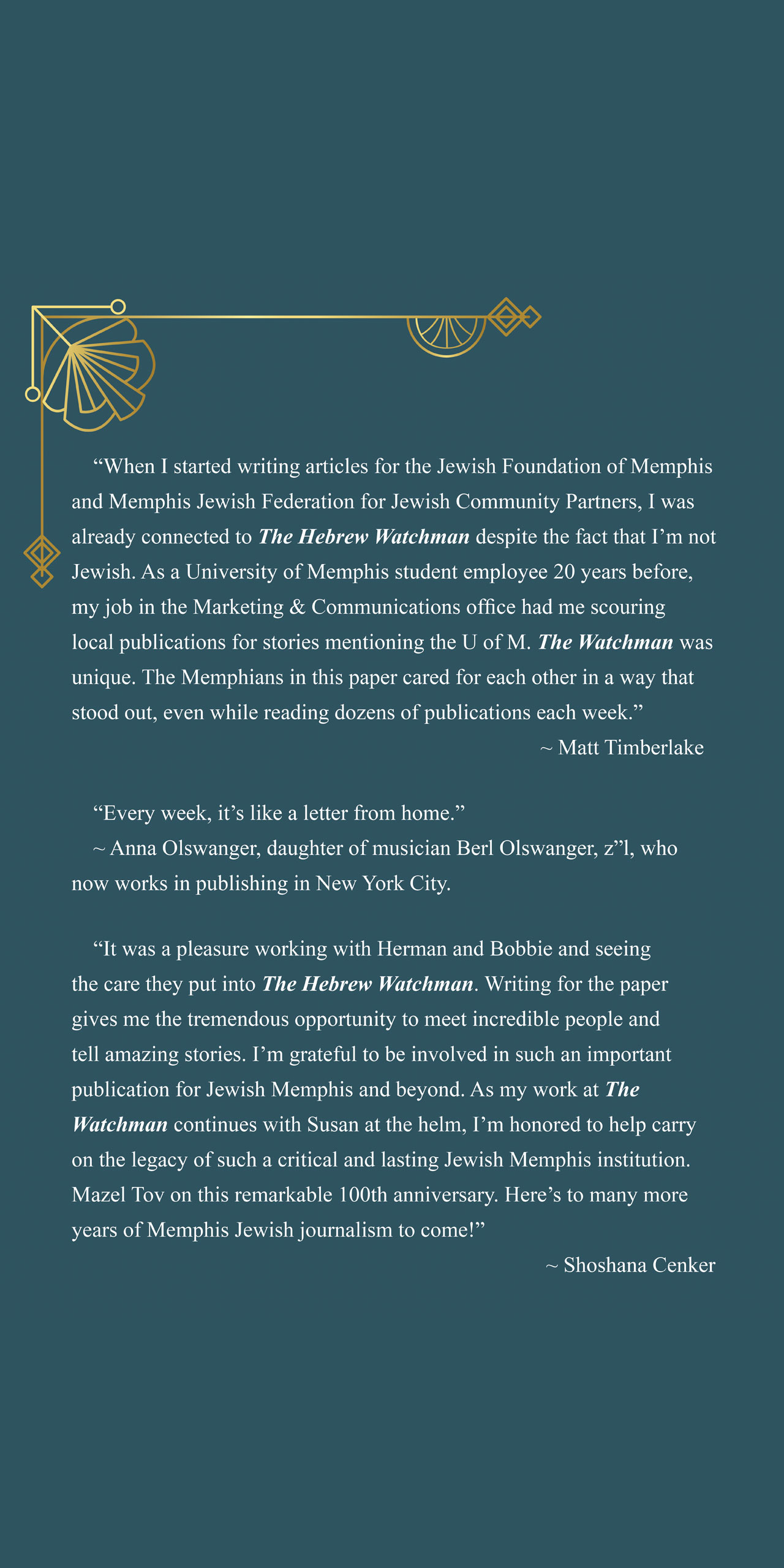
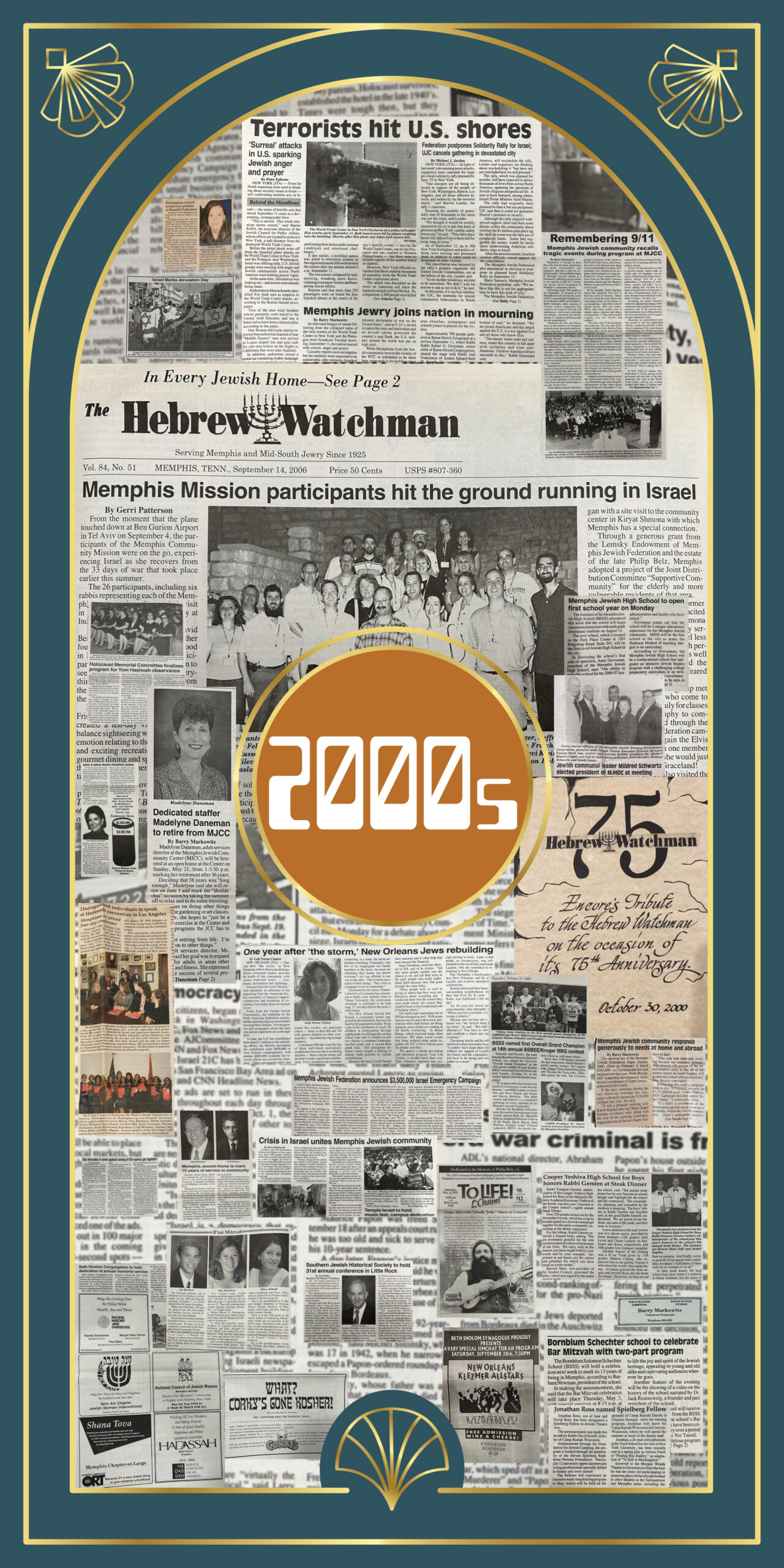
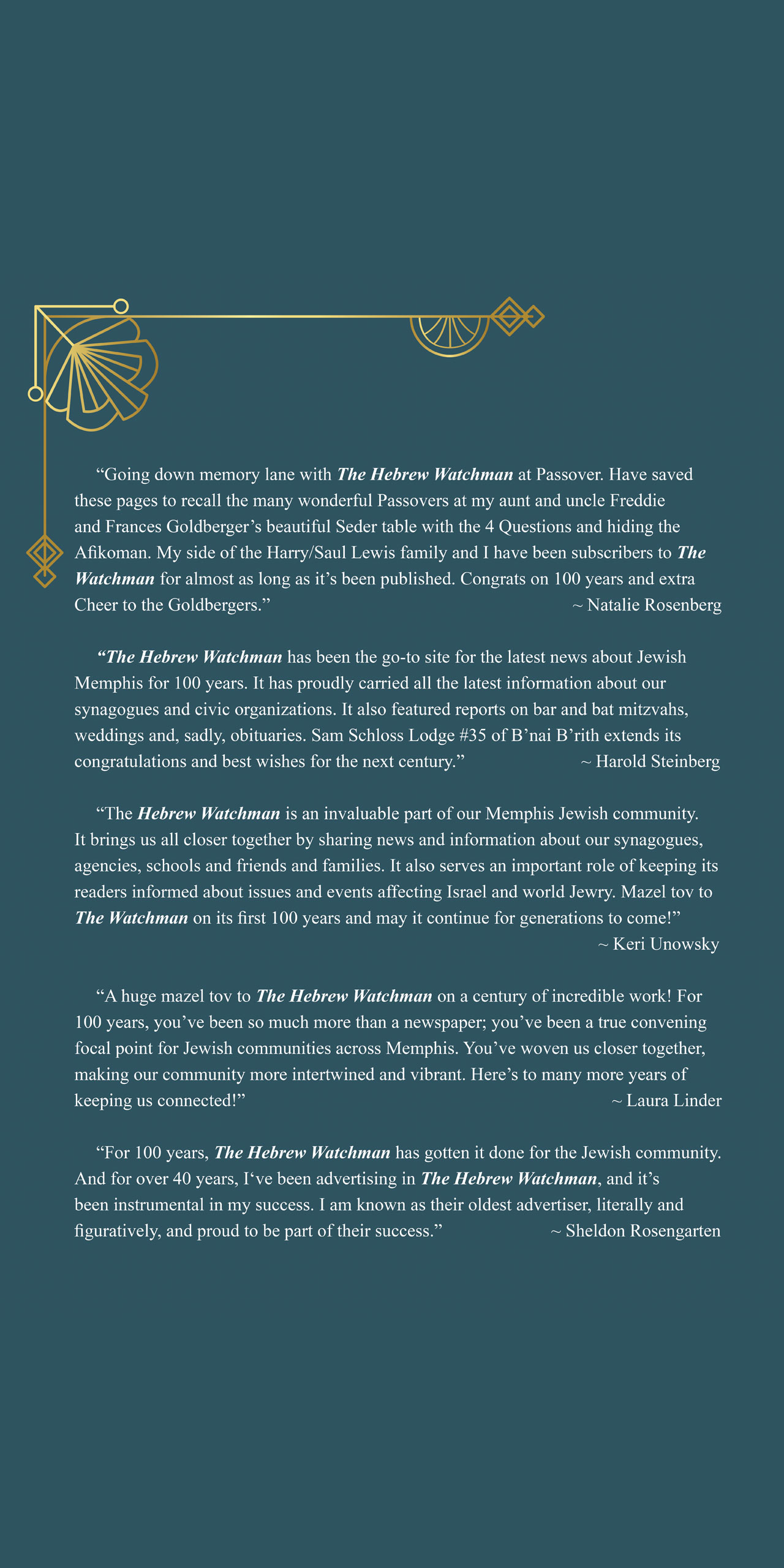
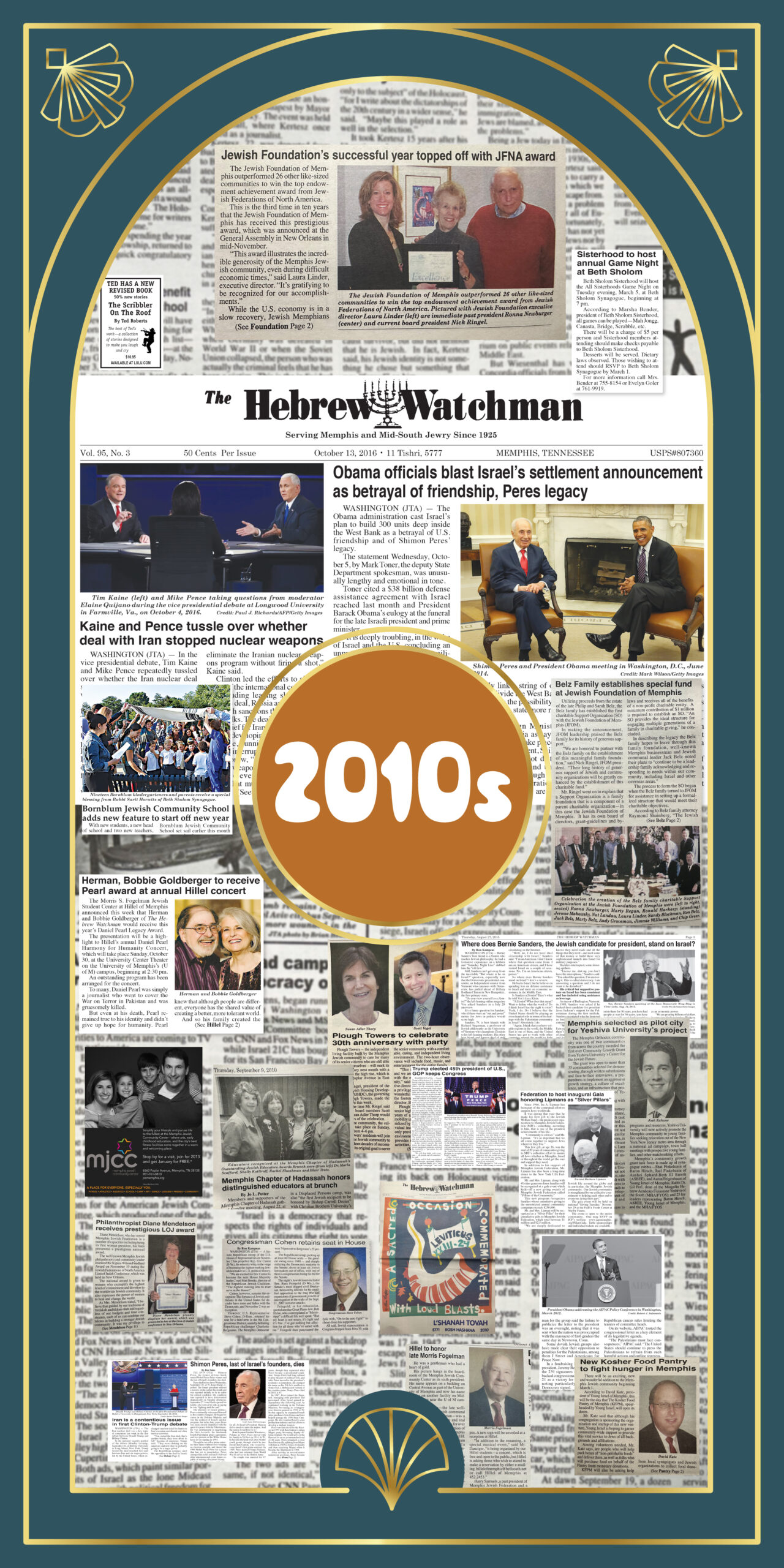
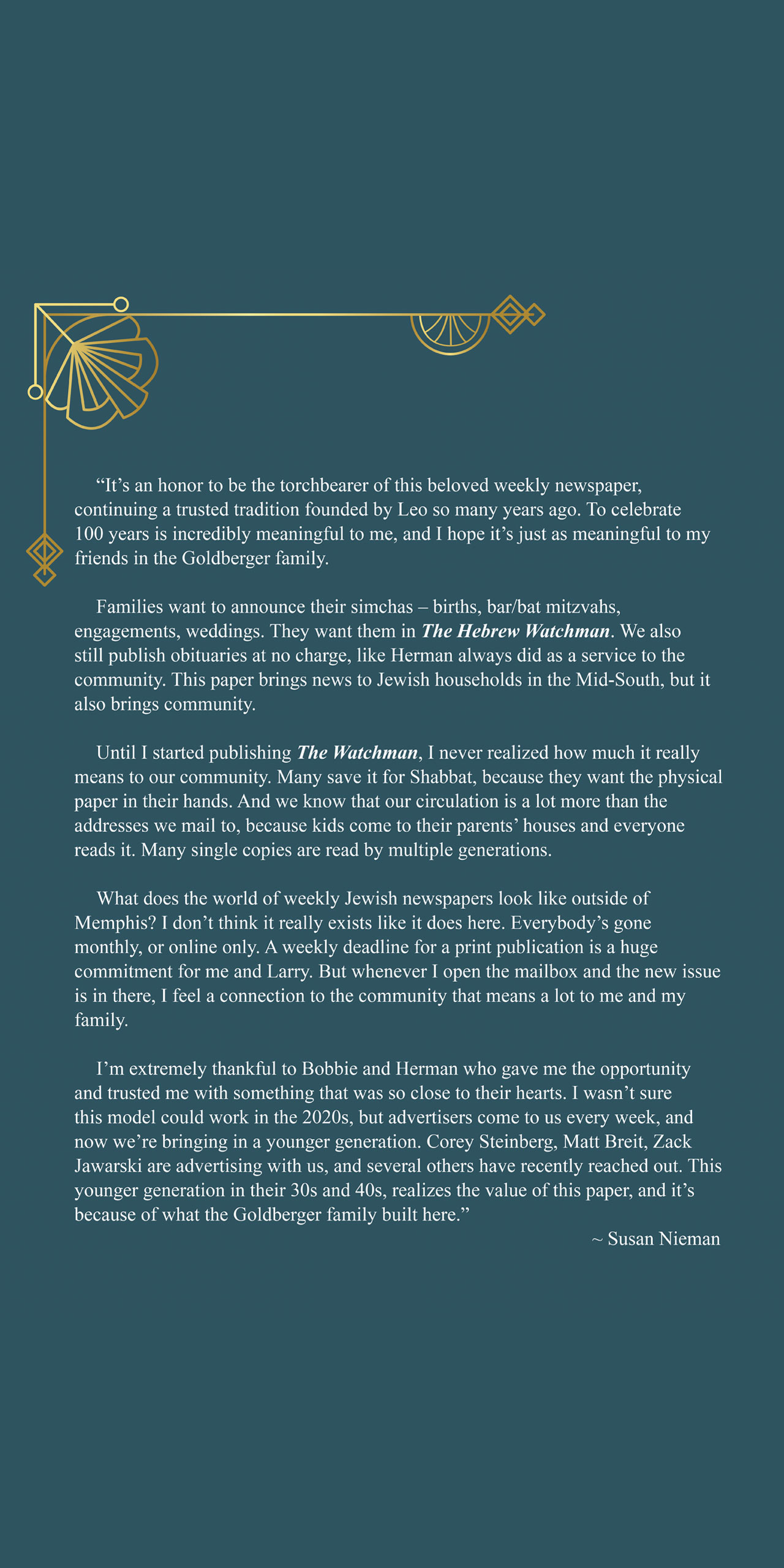
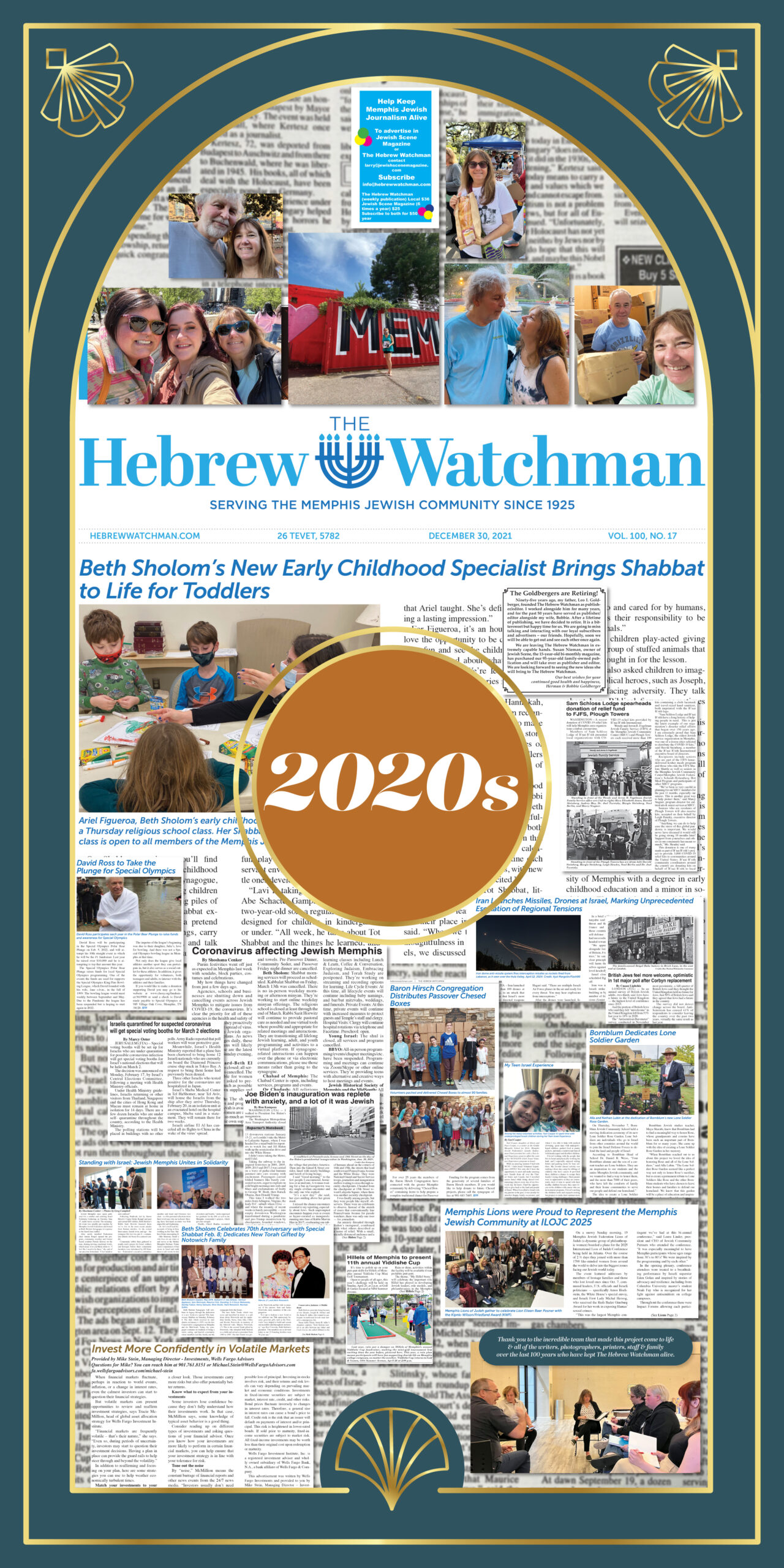
To view the full size panels,
use the links below.
(coming soon: Goldberger Family Gallery)
The Nieman family thanks Rebecca Schudel for the fabulous design of this exhibit and Matt Timberlake for his tireless research through the archives and hours of family interviews.
We also want to thank the people and organizations who supplied us with personal memorabilia that added touches to the exhibit.
We especially want to thank our loyal long-time advertisers, our growing list of new advertisers and our dedicated writers. Without these appreciative and supportive people and businesses there would not be a weekly newspaper. And thank you to all the subscribers who still look forward to receiving the paper.
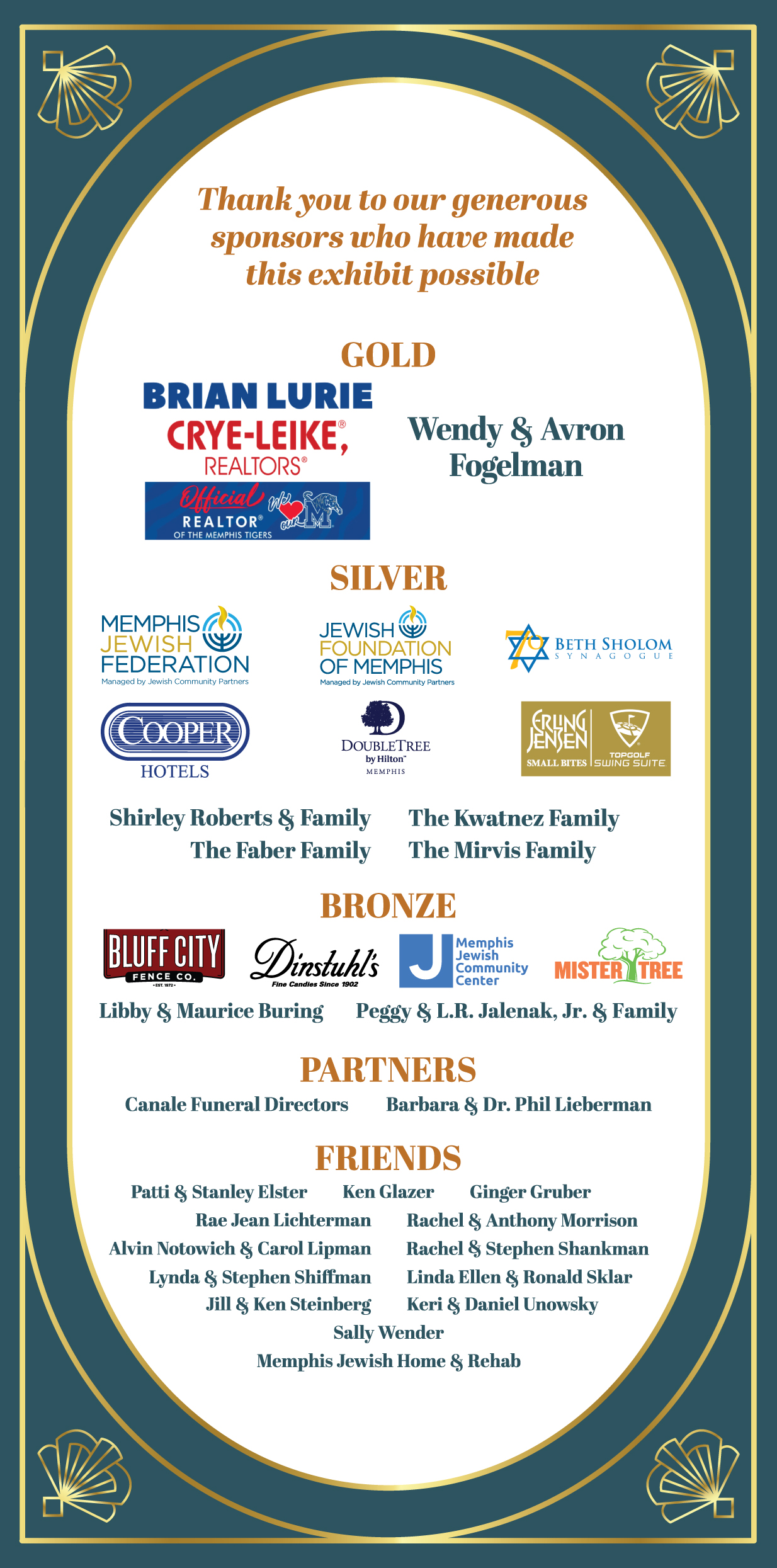
I am deeply grateful to our sponsors who made this exhibit possible!
Susan and Larry Nieman